Welcome to visit the official website of Shiningkey automobile electric appliances(shanghai)co.,Ltd.
As a core interactive component of the vehicle cockpit, the car window lifter switch directly affects the driving and riding experience as well as operational safety. In the current market, the traditional push/button type and the innovative push/pull type form two major mainstream camps, each with its own strengths and weaknesses, suitable for different vehicle positioning. With the advancement of the automotive intelligence and electrification wave, its development direction has gradually become clear, pointing out the R&D path for manufacturers.
The traditional push/button switch still holds an important market share with its mature advantages. Its core highlights lie in intuitive operation, which conforms to the long-formed usage habits of the public without additional adaptation costs. It features a simple structural design, high versatility of parts, and low production and manufacturing costs. Moreover, it maintains excellent stability in extreme environments ranging from -25℃ to 85℃, meeting the cost-effectiveness needs of economical and family vehicles. In addition, its clear pressing stroke and definite feedback can effectively avoid misoperation, making it particularly suitable for users who demand high operational certainty. However, its shortcomings are also obvious: vertical force is required during operation, which easily causes hand fatigue after long-term frequent use; furthermore, its integrated functions are limited, making it difficult to meet the integration needs of cockpit intelligence.
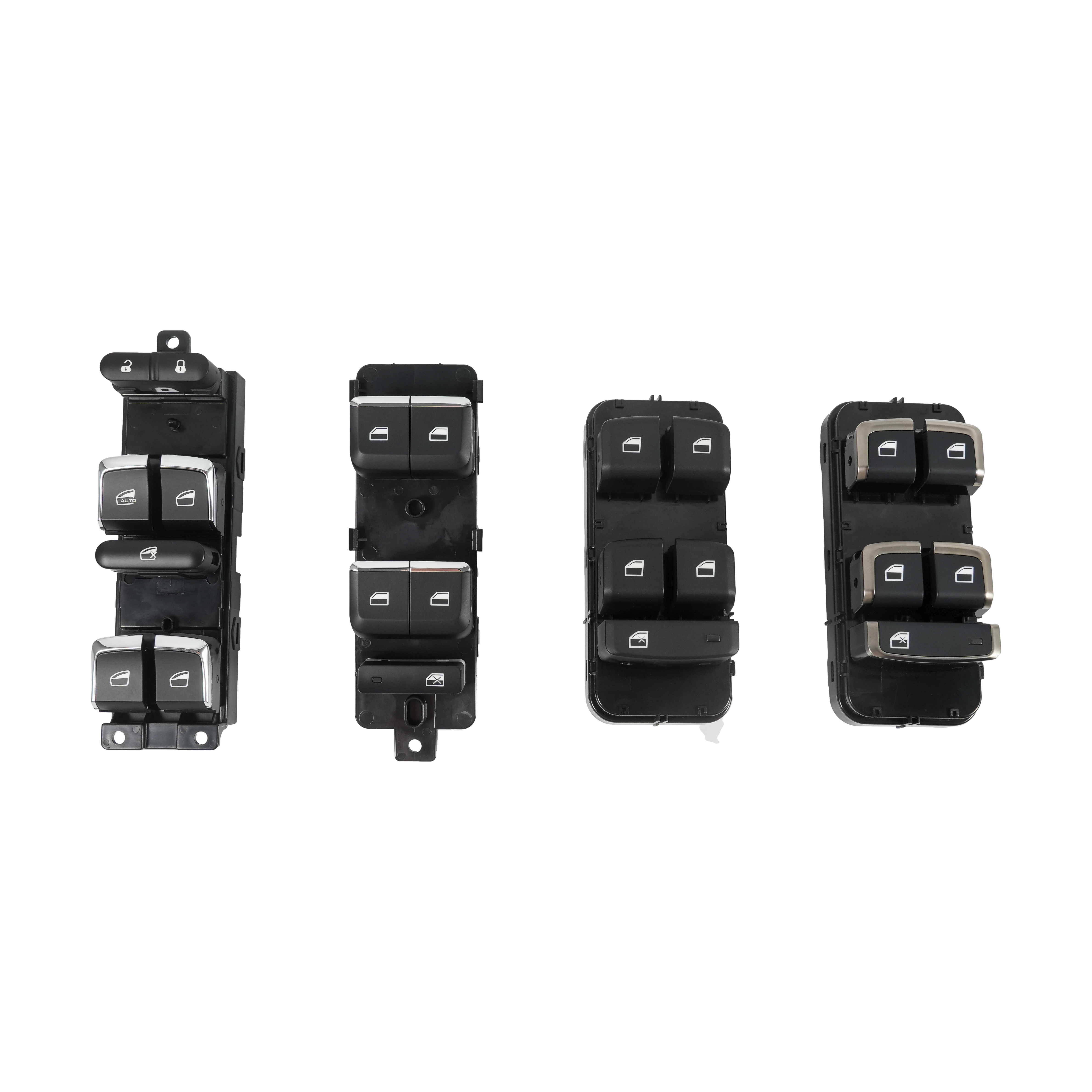
The innovative push/pull switch has gained popularity in mid-to-high-end models with upgraded user experience. Adopting a toggle operation logic that conforms to ergonomic design, it requires horizontal force application which is more labor-saving, greatly reducing the fatigue of the main driver caused by frequent operations. Its sleek and thin shape can be seamlessly integrated with the door panel interior, enhancing the sophistication of the cockpit. More importantly, its structure facilitates the integration of functions such as exterior rearview mirror adjustment, central control lock, and electric sunshade, and efficiently links with the Body Control Module (BCM) via the LIN bus, adapting to the multi-functional integration needs of intelligent cockpits. Nevertheless, the push/pull switch has a user adaptation period, and its initial R&D and mold costs are relatively high, making it temporarily difficult to popularize in low-end models.
In the future, car window lifter switches will evolve in three major directions. First, intelligent upgrading: functions such as touch sensing and voice linkage will be gradually popularized, and combined with the optimization of anti-pinch algorithms, more precise safety control will be achieved. Second, deepened integration: the switch module will further integrate more cockpit control functions, reducing the number of components and the weight of the vehicle wiring harness. Third, adaptation to the new energy trend: lightweight materials and low-power designs will be adopted to improve overall vehicle energy efficiency, while supporting collaborative linkage with modules such as intelligent window control systems and keyless entry.
For manufacturers, there is no absolutely optimal switch type; the key is to accurately match it with vehicle positioning. In the future, focus should be placed on the layout of intelligent technology R&D, balancing cost and experience. On the basis of meeting functional safety standards, manufacturers should realize the in-depth integration of products with the intelligent cockpit ecosystem.

Address:No. 635 Jianghe Road, Sijing Town, Songjiang District, Shanghai, China
Telephone:021-57620011
Fax:021-57629089
Mailbox:yxe@skswitch.com
 Pay attention to us